

Dental Emergency Guide: How to Save a Knocked-Out Tooth During Sports
Sustaining a knocked-out front tooth mid-game is a high-stress emergency, but immediate, calculated action can mean the difference between saving your natural tooth and requiring invasive dental implants.
If an adult tooth is completely displaced from its socket (an avulsed tooth), the clock is ticking. Follow this step-by-step emergency protocol to maximize the chances of successful replantation.
⏱️ The Critical Window
A tooth replanted within 30 to 60 minutes has the highest long-term survival rate. Immediate action is paramount.
1. Locate and Handle the Tooth with Extreme Care
How you handle the tooth in the first few seconds dictates its viability.
- Handle by the Crown Only: Pick up the tooth by the chewing surface (the white part normally visible in the mouth).
- Never Touch the Root: The root is covered in delicate periodontal ligament cells. Touching, scrubbing, or damaging these cells will prevent the tooth from reattaching to the jawbone.
- Rinse Gently if Necessary: If the tooth is covered in dirt or debris, rinse it under cold water or milk for no more than two seconds. Do not use soap, chemicals, or alcohol, and do not scrape or wipe the tooth dry.
2. Attempt Immediate Reinsertion
If the injured person is fully conscious and cooperative, the best storage place for the tooth is back in its original socket.
- Gently push the tooth back into the socket, ensuring it faces the correct direction.
- Have the individual bite down softly on a clean piece of gauze, cloth, or a handkerchief to hold it securely in place.
- The 10-Minute Rule: Reinsertion within the first 5 to 10 minutes offers the absolute highest clinical success rate. If you cannot reinsert it easily, do not force it; move to the next step immediately.
3. Keep the Tooth Viable (Storage Media)
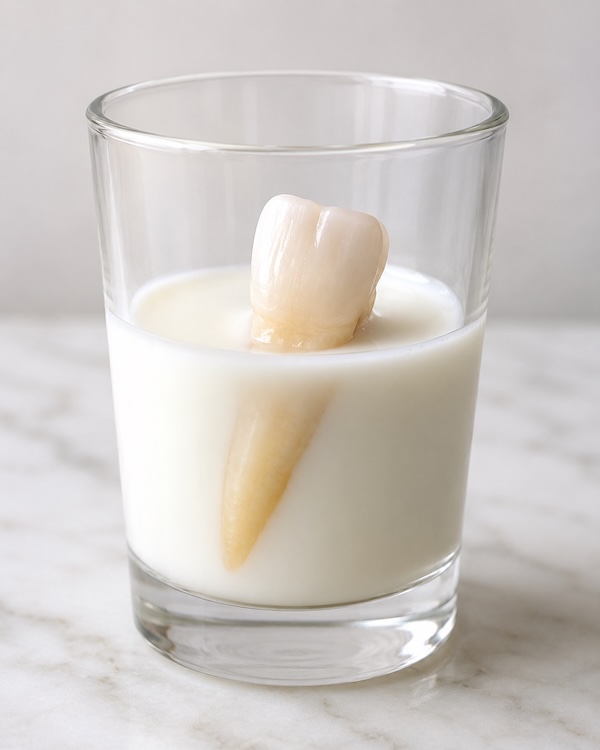
A dry tooth is a dead tooth. If immediate reinsertion is not possible, you must keep the root cells alive by submerging the tooth in a proper storage medium.
Storage Medium | Effectiveness | Availability |
Emergency Dental Kit (e.g., Save-A-Tooth / Hank’s Balanced Salt Solution) | Optimal (Preserves cells for up to 24 hours) | Found in advanced athletic first-aid kits |
Cold Whole Milk | Excellent (Matches the chemical balance of root cells) | Readily available at most sports facilities |
Saliva / Buccal Vestibule | Good (Keep the tooth inside the cheek) | Only if the patient is fully conscious and not at risk of swallowing it |
Tap Water | Dangerous (The hypotonic environment causes root cells to burst) | Avoid entirely |
4. Seek Urgent Emergency Dental Care
This is a time-critical medical emergency.
- Call Ahead: Contact an emergency dentist or the nearest urgent care clinic while en route so the medical team can prepare for your arrival.
- Go to the ER if Needed: If an emergency dentist is unavailable, head straight to the nearest hospital emergency room.
5. Manage Pain and Bleeding
While traveling to the clinic, take these steps to manage trauma symptoms:
- Control Bleeding: Apply firm, direct pressure to the socket using a sterile gauze pad.
- Reduce Inflammation: Apply a cold compress or ice pack wrapped in a cloth to the outside of the cheek or lip to curb swelling.
- Pain Relief: Over-the-counter anti-inflammatories like ibuprofen can help manage acute pain. Avoid aspirin, as it acts as a blood thinner and can exacerbate bleeding at the socket site.
Proactive Protection: Preventing Future Injuries
Once the immediate emergency is resolved, implement long-term preventative measures to safeguard your smile:
- Invest in a Custom Mouthguard: Over-the-counter “boil-and-bite” guards offer minimal defense. A custom-fabricated mouthguard from your dentist provides superior shock absorption and structural protection for contact sports.
- Audit Team First-Aid Kits: Ensure your school or local sports facility keeps an emergency dental preservation kit on hand.
- Replace Gear Regularly: Mouthguards degrade over time. Inspect them seasonally for tears, thinning, or changes in fit.
Opening Hours
Monday – 9.00am – 5.00pm
Tuesday – 9.00am – 8.00pm
Wednesday – 9.00am – 5.00pm
Thursday – 9.00am – 8.00pm
Friday – 9.00am – 5.00pm
Saturday – 9.00am – 1.00pm
Sunday – Closed
Use our menu and search function to find what you are looking for