

What to Do If a Tooth Gets Knocked Out
A tooth being completely knocked out—called avulsion—is one of the most time-sensitive dental emergencies. The goal is to preserve the living cells on the root surface so the tooth can reattach to the bone. Every minute matters, but the right steps can significantly improve the outcome.
What Happens During an Avulsion?
When a tooth is knocked out:
- The periodontal ligament (PDL) fibers (tiny connective tissues) are torn
- Blood supply is disrupted
- The root surface cells begin to die if they dry out
Preserving these cells is the key to successful reimplantation.
Step 1: Act Immediately (Golden Time Window)
- Best outcome: Reimplant within 15–30 minutes
- Possible success: Up to 60 minutes (if stored properly)
- After 60 minutes dry time, long-term survival drops significantly
This is why on-the-spot action matters more than anything else.
Step 2: Handle the Tooth Correctly
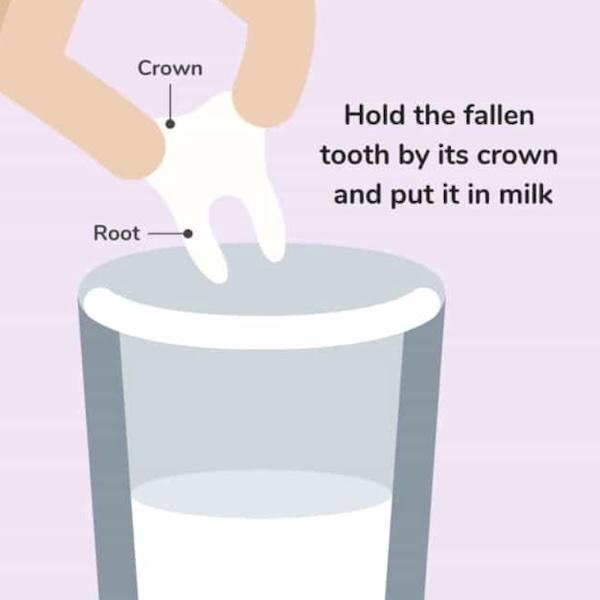
- Always hold the tooth by the crown (top part)
- Never touch the root — it damages vital cells
- Avoid wrapping it in tissue or cloth (this dries it out)
Step 3: Cleaning the Tooth (If Dirty)
If debris is present:
- Rinse gently for no more than 10 seconds
- Use:
- Cold milk (best easily available option)
- Saline solution
- Clean water (only if nothing else is available)
Do NOT:
- Scrub or brush the tooth
- Use soap, disinfectant, or alcohol
- Dry the tooth
Step 4: Reinsert the Tooth (Best Option)
If the person is conscious and cooperative:
- Align the tooth correctly (check orientation)
- Gently push it back into the socket
- Bite down softly on gauze or cloth
Even if it’s slightly uncomfortable, this gives the highest chance of saving the tooth.
Step 5: If Reinsertion Isn’t Possible
Keep the tooth moist at all times. Best options (in order):
- Milk – ideal pH and nutrients
- Hank’s Balanced Salt Solution (HBSS) – found in tooth preservation kits
- Inside the cheek (buccal pouch) – only if safe (not for young children)
- Saline solution
Avoid:
- Water (damages root cells over time)
- Dry storage (most harmful)
Step 6: Emergency Dental Treatment
At the clinic, the dentist may:
- Reimplant the tooth (if not already done)
- Stabilize it with a flexible splint for 1–2 weeks
- Prescribe antibiotics (commonly Amoxicillin or alternatives)
- Assess need for a tetanus booster
- Perform or schedule a root canal treatment (often within 7–10 days)
Special Situations
Baby Teeth (Primary Teeth)
- Do NOT reinsert
- Risk of damaging the developing adult tooth underneath
- Still see a dentist for evaluation
If the Tooth Is Fractured
- Collect all fragments
- Store them in milk or saline
- Bring them to the dentist — they may be reattached
If There’s Bleeding
- Apply gentle pressure with gauze
- Bite down to control bleeding
- Avoid excessive rinsing
Long-Term Outcomes
Even with perfect handling, complications can occur:
- Root resorption (tooth gradually dissolves)
- Infection
- Ankylosis (tooth fuses to bone and stops moving naturally)
Regular follow-up is essential for months or even years.
Prevention Tips
- Wear a custom mouthguard during contact sports
- Use helmets with face protection where appropriate
- Address protruding teeth (higher trauma risk)
- Avoid chewing hard objects like ice or pens
Final Takeaway
A knocked-out tooth isn’t automatically lost. The difference between saving and losing it often comes down to what happens in the first few minutes. Handle it properly, keep it moist, and get professional care immediately.
Opening Hours
Monday – 9.00am – 5.00pm
Tuesday – 9.00am – 8.00pm
Wednesday – 9.00am – 5.00pm
Thursday – 9.00am – 8.00pm
Friday – 9.00am – 5.00pm
Saturday – 9.00am – 1.00pm
Sunday – Closed
Use our menu and search function to find what you are looking for